Sunday, February 28, 2010

Clinton vs. Palin

When I read the first question, Hillary Clinton immediately popped into my mind. At first, I dismissed writing about her as being too much of a cliche but as I thought more about it, I realized that the public perception of women in politics is far more complicated than I had realized, especially once I began to compare Hillary's reputation with Sarah Palin's. Hillary has clearly taken on many masculine traits. She wears modest pantsuits and has her hair cut short. As a child, she played baseball and was active in politics. Hillary graduated from Yale Law School and quickly became a highly successful lawyer, even being listed twice as one of the 100 most influential lawyers in America. All of this has paid off for Hillary: she was a New York senator, a candidate for the Democratic presidential nomination in the 2008 elections and is currently the secretary of state. However, now that she has reached a position of power by assuming masculine traits, any display of femininity is widely rejected by the American people. Hillary was criticized for showing a tiny amount of cleavage and for tearing up when asked how she manages to do it all. The second event actually endeared her to some of the population; it made her seem more human, more approachable, but overall, the reaction to both her cleavage and her tears was negative.

By comparison, Sarah Palin is the epitome of femininity. Yes, she hunts, a typically masculine activity, but her day to day persona is very much feminine. She wears pencil suits and tailored blazers with her signature glasses and updo. Sarah portrayed herself as a hockey mom (complete with lipstick), a wife, an ordinary woman, who just happened to be running for vice president. Unlike Hillary, she embraced her femininity and was rewarded for doing so. There is talk of her running for the 2012 elections, even after she quit her post as governor of Alaska. Both Hillary Clinton and Sarah Palin are important women politically but unlike Hillary, Sarah is lacking the education and experience that Hillary has. Sarah attended four schools after high school (Hawaii Pacific University, North Idaho College, Matanuska-Susitna College, and University of Idaho) before finally graduating with a bachelor's degree in communications. She worked as a sportscaster and after eloping with her husband, helped with his commercial fishing business before becoming involved in politics.

To be honest, I can't understand how Sarah Palin - a relatively uneducated, extremely feminine woman - could even be close to reaching the same political level as Hillary Clinton - an extremely educated woman who has adopted masculine traits. After all, the world of politics is typically a man's world. Maybe this is a sign that America is at a point where a woman will not penalized for embracing her femininity but to be honest, I find that hard to believe.

Saturday, February 27, 2010

Oh Tiger!


It is my task this week to find males who take on female traits and, more or less, get slapped for it. This is a task which I shall, nay must, take up to expose the misogyny of this cruel world! So lets get to it boys and girls.

Firstly, I want to give an example of a man being to total man and getting away Scot-free. Enter Tony Blair, the former PM of the UK who lied to the world and started an illegal war. So war, that's really mannish; also, lying is top-notch man behavior, not to mention being the leader of the British Empire (we still have the Falklands). And when he was put on the stand to defend why he claimed Iraq had WMDs, he dodged the questions, blamed everyone else with a pulse and denied the whole lot of charges. He stuck to his guns, didn't back down, and sauntered out of there feeling groovy.


Now we come to Tiger. The ultimate "manly man," no? I mean come on, he was a pro-golfer earning millions upon millions and he had all the women he wanted (or could pay for). Okay so he got caught and a cataclysm was unleashed! What would Tony (the man) do? Deny it all.
"Wait, a prostitute? No way, all lies, I'm suing for libel."
So instead we have Tiger apologizing to the mothers, daughters and sons of America, taking full responsibility and showing his sensitive side. How did the media react? It was a slaughter. It made Verdun (WW1 battle) look like a relaxing day on the back nine. He took the "feminine" route by showing his emotions, getting a bit teary-eyed and claiming "look I'm sorry, I messed up." No Tiger, when will you learn. In this world you fight fire with fire. When you sell yourself as the ultimate man and then you go on TV and show your sensitive side, even though you of course have one, do you think the media and everyone else will buy your story? Gatorade quickly dropped Tiger as a sponsor after the apology. Now why is this? They could have done it long ago when the mayhem was unleashed. No, they waited to see what Tiger would do. He apologized and they slapped him. He was mocked even more! It seems like he should have followed Tony Blair's example. What a weird world this is!

So what should he do to make up for it. Well he should cancel his Oprah appearance if he planned one. Basically, he should act in a masculine fashion by forgetting the drama and getting back to the only thing he does well, golf.

Kathryn Bigelow: A closer look


For those of you who don't know Kathryn Bigelow is an American producer and director, creator of The Hurt Locker (Oscar best picture favorite) and winner of the directing BAFTA (British academy awards) for the same film. Once married to James Cameron (Titanic, Avatar) she is predicted to beat her ex-husband in both the best director and best picture awards. She is the 4th woman to be nominated for the Best Director award at the Oscars and will be the first to win if she pulls off a victory next Sunday. But why has it taken so long for a woman to win a best director oscar? There are plenty of women in the field and yet little recognition has been given to these women for their skills. And why is Kathryn Bigelow the first woman to be seriously considered for the award? After all, her movie was pretty small and seen by few. After seeing the movie I had a better understanding. The Hurt Locker is the most macho, adrenaline filled, masculine movie I've ever seen. Taking place in post-invasion Iraq, it is a war movie about an elite bomb squad in Baghdad running around defusing precarious bombs. I don't even remember there being a single woman in the movie. Is it possible that a woman has to make such a manly movie to win the oscar? How about Boys Don't Cry? Or even Big with Tom Hanks? Little Miss Sunshine? Monster? WAYNE'S WORLD? Ok, maybe there aren't that many good movies made by women, but they should not have to make such a masculine movie as The Hurt Locker to win an Oscar for their directing.


It's the same as Tom Hanks winning an Oscar for playing a gay lawyer in Philadelphia. It's a great movie, but in order for someone to win an oscar for playing a gay character that person had to be straight and not play the character effeminate at all. The comparison could even be drawn to Obama. Many people were annoyed that it took Barack Obama, someone who many considered to be "too white" to win the presidency as the first "black" president.


I hope Bigelow wins the Oscar next Sunday, not because she is a woman, but because she deserves it for her work. But I still wonder if she would be such a contender had she made a more feminine movie. Would Hollywood love her as much?

The Two Sides of Taylor Swift's Music


I partially admire Taylor Swift for writing these songs. After all, it takes some amount of self-confidence to talk about all of the times you have been dumped, especially in front of a live audience. In my opinion, she's not a great singer, but the songs are fairly catchy, the beat is usually uplifting, and, overall, she's at least somewhat relatable. So, yes, I do listen to her music. What annoys me the most about Taylor is that, although it's obvious that she puts a lot of thought into her music, most of her songs share a very common theme: they're about guys she has either pined over or dated. I appreciate her sincerity and honesty about her experiences, and I understand that this is what (supposedly) teenage girls think about, but at the same time, I don't really want to hear the same general story line again and again. One of my favorite songs is actually not about a love interest, but her mom. The song is titled "The Best Day" (http://www.youtube.com/watch?v=Hq4W68_h6rw). I really wish she would talk about other aspects of her life, and not just the picture-perfect fairy tale ending.

Taylor's image is extremely clean--she's not too old to still be talking about teenage love stories (she's 20), but is mature and focused on her career. The real issue is the stereotype that many people think she is perpetuating to young girls. This has noting to do with sexual promiscuity, but rather the idea that girls tend to be the 'damsel in distress' in relationships. I don't think Swift is trying to say this in some of her songs (for example, 'Picture to Burn' is her decision to leave a guy when he cheats on her), and I don't believe that this mindset is truly her message behind the words. Contrary, writing songs seems like a productive way for her to vent her emotions & get over relationships. It sells because she's not far from high school herself. A lot of teenage girls relate to her because they feel they should.

So, is Taylor Swift teaching these girls to be 'the girl who always needs a boyfriend to be happy'? Is it possible that being single is sometimes a good thing? When looking for a topic, I 'googled' feminine stereotypes--Taylor Swift, and found a very conservative blog http://www.cosmopolitanconservative.com/tag/femininity/. The blogger says that Swift is portraying the traditional gender role, and that it isn't fair to criticize her image when a lot of people prefer traditional values and the original definition of femininity. Although I don't agree with this idea, I do agree with the overall statement- Swift isn't doing anything provocative, she just wants to talk about boys. What's wrong with that? What's really wrong with daydreaming, wishing that the person you like will suddenly realize they belong with you (pun intended-http://www.youtube.com/watch?v=TUjLHhC3oEs)?

I'm divided in my opinion of Taylor-- I don't want to believe in and support this submissive stereotype of the female, which does seem to be so explicitly stated in her music, but, at the same time, I don't think this is the image she wants to portray. She is, actually, taking on very masculine traits- she is in-control of her career (she has written or co-written all of the songs) and seems confident in her decisions (the Kayne West incident was fairly indicative of her maturity). I think she is good role model because of how she has handled her career & fame. Unlike a lot of female singers, she seems confident in herself and is in full control of her life. Her reward? Four Grammy Awards. Sacrifices? Possibly living up to this image that she created for herself. Once she decides she wants to write about more serious subjects, it may be the end of her career.

Sunday, February 21, 2010

Questions for Blog 4: Gender & Sexuality - choose at least one of these to answer.

1. What examples do you see in the media of females (fictional and real-life) being rewarded or affirmed for taking on conventional masculine traits and/or behaviors?
(example: rewarded means getting the job, getting "what she wants", getting ahead or gaining an advantage). Are there any sacrifices that these females characters have to make in order to get ahead or get what they want?

In Grey's Anatomy, for example, there is a constant tension in the plots between the female characters getting ahead, often by taking on masculine traits of aggressive competitiveness and no-emotional sexuality and their "feminine" need for love and relationship.

2. What examples do you see in the media of males (fictional and real-life) being penalized for taking on conventional female traits and/or behaviors? (penalized meaning "not getting what he wants," suffering loss, mockery or humiliation). What roles do these traits or behaviors play in the overall plot (e.g. are they used to make someone else look good, or does the male ever regain his masculinity)

What examples do you see in the media of women being used as sexual objects in the media? In your example, who is the audience and how are the presumed fears and anxieties of the audience being manipulated?

Thursday, February 18, 2010

Persians, the next Guidos?


In a story that my cousin told not too long ago, she loses a pair of large Gucci knock off sunglasses during a ski trip with her classmates. On the way up the slope in search of the glasses, her friend approaches her with the glasses and asks "are these your persians?" In the past, people that I have talked to seemed oblivious to Persian culture and its ways. But to my surprise, people have learned about these cultural ways and have already created a set of stereotypes with them. The stereotypical Persian is known for flaunting his/her wealth through designer clothing and flashy jewelery. With that in mind, I get the feeling that this stereotype will soon catch on with mainstream media (in fact, it already has through South Park) similar to the way MTV created Jersey Shore after the release of the popular youtube video "My New Haircut" (http://www.youtube.com/watch?v=4JMOh-cul6M). I think that this trend shows that the public is fascinated by the unknown subcultures within America and that television/media companies act on this by creating shows to pander to this fascination. My question to you, my esteemed reader, is what will MTV call their next probable reality tv show on Persians? Tehrangeles perhaps? Only time will tell.

Pwning n00bs!

So I don't play tons of video games, but as an outsider looking in to the video game world what I take from it is that it is really homophobic and misogynist.

http://www.youtube.com/watch?v=btn55_Lf5vI&feature=sub
It takes a while to get to the point in this video, but there are two parts that stick out the most as homophobic. The character Daryl describes himself as not being a n00b bitch cause he had a bad game. Then they do their role playing activity. Billy lays on the ground as Harry T-bags him. This is their idea of a punishment (or uber pwnage). Another guys balls in their face, something gay. So gay activity is a punishment? Lastly the support group leader trys to convince the scared girl that not all gamers are homophobes until his point is proven wrong when Daryl hits him over the head with a chair and yells "I dish out pwnage, I don't take it like you homos. Suck my dick, suck my dick"

If you thought that was offensive in anyway the other one is longer and much worse.

http://www.youtube.com/watch?v=LCYPGnJdO1U

Although this one is long it hits a lot of homophobic and misogynist issues. It's pretty self exlanitory if you watch it. essencially a gamer is forced by his girlfriend to play a board game with another couple and he plays it like he's playing a video game. He lables the game, the guy other guy or even instances that make him loose "gay" or "homo"
He goes on about how he hates playing with girls, he talks about "butt fucking" the other players.


Both of the videos are self explanitory about how the gaming world can be homophobic and misogynist. Is that an accurate portrayal or am I way off?

Cor Blimey!!


So I didn't know what to blog about. Then I hit some seriously foondamental inspiration! I'm going to analyze British stereotypes to see if they're true. Now as we all know most stereotypes are dead wrong, so I reckoned it would be interesting to see how British stereotypes hold up.

1. REALLY bad teeth...

Yup. Looks like that's true. I mean look at those fangs! According to the notoriously reliable tabloid The Sun, many British families cannot get access to a dentist even if they could afford it. http://www.thesun.co.uk/sol/homepage/news/1592127/Thousands-of-Brits-have-rotten-teeth-because-they-cant-find-a-dentist-due-to-NHS-dentist-crisis-figures-reveal.html
Looks like the media was "spot on" when it comes to British teeth

2. Ugly Women

Okay this one may be controversial but if you look to the right, it seems like its a no-brainer. Actually, I would say this stereotype is dead wrong. There plenty of nice looking British actresses, such as keira knightley, and if you were to walk down Kings Road London, you would find many pleasing specimens of the female form. Stereotype Busted!

3. Brits can't dance?

So if you've ever seen me on the dance floor, and I hope you haven't, then you know this stereotype is true. Ok so you aren't convinced? Take a look at this: http://www.youtube.com/watch?v=OE6P-lwS0lQ

That looks like 2 out of 3 are correct. Does this mean that stereotypes may have at least a shred of basis in fact? Yes, for a minority of people. The problem arises when these observations about a minority of people are applied to the whole nationality, racial or ethnic group. Of course, most British people have tolerable teeth and most people across the pond can bust a pleasing move on the club floor. While it might be hilarious to point out the above stereotypes, they aren't based in statistical fact. That's the foondamental problem with stereotyping. After that, it's just offensive! Not to me, but others I suppose will get slightly fumed.

The bisexual renaissance?


I came accross something curious procrastinating on itunes last night, 3 of the singers in the itunes top 5 albums are bisexual women. Currently the top 5 are as follows:

1. Soldier of Love- Sade
2. The E.N.D.- Black Eyed Peas (Fergie is bisexual)
3. Need You Now- Lady Antebellum
4. Animal- Ke$sha (bisexual)
5. The Fame Monster- Lady GaGa (bisexual)

Since when are so many of the nation's top pop stars women, and since when are so many gay? And how is it that gay rights are still an issue when so much of the popular media is coming from what many call the 'last oppressed minority?' Is this a gay renaissance in media? I'd like to think so. Just look at Katy Perry's 'I kissed a Girl' hitting number (she's straight) 1, or Adam Lambert (he's gay) getting close to as many votes on American Idol as Barack Obama in the national elections. For much of my life, and most importantly to me in the last few years since I've come out of the closet as an out and proud bisexual, there haven't been many popular out role models. I guess David Bowie is still alive out there somewhere, and Neil Patrick Harris is cool, I guess. But never before have I seen so many gay artists being so commercially successful at one time. Recent years have seen the meteoric rise of Lady Gaga, Milk and Brokeback Mountain at the Oscars, Ellen Degeneres as a judge on American Idol and a new resurgence of gay media domination. Not since the 80s with Bowie and Madonna has bi been so big in the music scene, and LGBT cinema has never been so critically or commercially successful, ever. In the midsts of the gay civil rights movement, the little brother of its 60s counterpart, the media is starting to display LGBT artists openly and doing what they want to do. And while I hate most of their music, I look forward to the future careers of Gaga, Fergie, Ke$ha and yes, maybe even Glambert.

Eroticization of women of color

There is a clear pattern to the way women of color are portrayed in the media. They are exotic, beautiful, and untouchable. Their differences make them interesting, alluring and men are almost magnetically drawn to them. At first, this sounds like a wonderful thing - after all, most women would love to fit this portrayal. However, I think the problem starts when this becomes the only way women of color are portrayed in media. This eroticization is also dehumanizing - by only showing women of color as objects of beauty or of sex to be enjoyed by (mainly white) men, the media neglects to portray them as people.

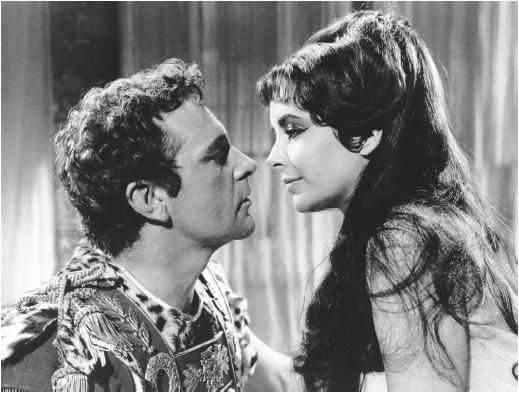
This view of women of color is hardly new. In the 1963 film Cleopatra, Elizabeth Taylor (who interestingly enough is white) paints on enough eyeliner to play the Egyptian Queen Cleopatra, whose beauty bewitches both Caesar and his successor Marc Anthony. Memoirs of a Geisha (which was actually written by a white man) tells the story of a woman who is essentially an upscale prostitute, trained to use her body and mind to control the men around her. In fact, her test is to see if she can stop a man in his tracks with a single look (shown towards the end of this video clip: http://www.youtube.com/watch?v=wYzqz3dMBCo). Halle Berry won an Academy Award for her work in Monster's Ball but as many critics pointed out, she also participated in a graphic sex scene in the movie.

Of course, there are counterexamples too. There are certainly women of color who are portrayed as people, not objects, but the objectification and eroticization of women of color is still far too common today.

Gender bending?


The fashion industry is one of the most confusing and complex industries out there. It's beyond just what is "in" style and what is "out" of style. In fact, the fashion industry is one of those industries where what is presented through fashion magazines, editorials, advertisements, and fashion campaigns seems to be aimed at the wrong audience. Why are all the faces of most male models, who are supposed to be selling masculine clothing for men, clean shaven, made up and airbrushed to the point where their faces look feminine? Why are androgynous looking female models the more well paid and well known supermodels?

It's difficult to understand an industry that cranks out clothing for men and women to wear and trends for them to follow when the faces representing the clothes and trends seem to be the opposite of their intended target. Almost every men's fashion magazine that I open has advertisements for brands that show men in either really masculine, almost lumberjack like clothing, or they have men who are selling suits and ties but look almost completely feminine. I mean seriously, it's a men's magazine. Why would men who look like adolescent girls with short hair represent a fashion label that makes clothes for fit men who look more masculine?
It's not very different in women's magazines, either. Models like Agyness Deyn, Ranya Mordanova, and Omahyra Mota, who look very androgynous with short haircuts, minimal makeup, and have flatter chests, walk runways all over the world and are deemed the ideal supermodels for haute couture and ready to wear collections. The confusing part is the people who buy the clothing that those models wear down runways don't look anything like the models at all. I don't think Jessica Alba or Angelina Jolie would be called androgynous looking, yet they are the ones buying the latest dresses from designers who love to use androgynous models. It's weird because most people don't think of men airbrushed in makeup and women with short hair, but the fashion industry features many of these "gender benders" in every photograph.

Wednesday, February 17, 2010

GOING DUTCH.


Why can’t women pay? Today at work I was struck by how many men insisted on paying for their dates. There must have been about five couples who fought over who would pay. One man said “now I feel bad that you bought it because I don’t feel like the man in the relationship anymore.” I was thinking WOW. Why can’t women pay for the dates? There are so many stereotypes in the media that portray men as more masculine and dominant over women; for example, in magazines, movies, and also song lyrics. (Trading Places by Usher).
I feel that men feel obligated to take the tab most of the time because the media tells them to. For example if a bunch of couples went out to dinner and all of the guys paid for their dates except for one guy, I bet that ONE guy would feel ‘unmanly’, for lack of a better word. This is true because whenever I go out with my friends all of my guy friends complain about always having to pay. However, when I tell them to let the girls pay, they get all defensive by thinking “that’s not right.” It’s rather ridiculous when you take a closer look into this matter. It’s unfair because women should be treated equal to men. I’m not complaining about getting free food or anything, I just think that the media has a lot to do with how men view themselves and their own responsibilities. I think women could easily play the role of a “man”. Women and men should be seen as equal. Media gets into our heads more than we think, especially for men.

Here’s a song that talks about how Beyonce feels that she could play a better role as the ‘boy’ in the relationship.


http://www.youtube.com/watch?v=3WkXPPLiZOY

Women in the media

So lately I've been getting home around 7pm and I sit infront of the tv for about an hour or so with my dinner and watch House of Payne. I have to say it is a really really funny show but there was an episode last night where the moma(ill call her moma becuase I don't know her name--give me a break I just started watching the show) any ways, moma wants a job but papa is like no way! You can't get a job, your a woman! Your supposed to be staying at home taking care me, cooking me food, cleaning the house and etc. Moma insists and says she is going to get a job no matter what Popa says. Popa says that she won't be sucessfull at her job and that she will come running back to her husband for support. So Moma goes to the mall and gets a job. She does soo well on her first day that the owner promotes her to manager because she did a great job and because the owner fired the only other employee that was there. The point is that women in the media are depicted as powerless house wives who need to stay at home and cook dinner for their husbands. Of course we know this isn't true. Women have been doing great things all over the world. However, I do understand the message the show was trying to portray. That althought women are looked down upon by men they can still succeed if they fasten their seat belt and set their minds on doing whatever it is they want to do.

Gender Stereotypes of Bachelor


There is a consistent demonstration of competition on the ABC television show "The Bachelor". The reality show draws about 12 million viewers each week to watch the bachelor, Jake, narrow down his search for "his perfect bride". I haven't watched this season of the Bachelor, now on its fourteenth season, but the script is always the same: the competition between the girls, the fake personalities, the many, many rose ceremonies that always end in tears. Albeit, the Bachelorette is not very different from the Bachelor; all of the people that go on their respective shows chose to sign up for them. What seems to be the main difference between the shows is how the women versus the men are portrayed in the context of the situations presented. The women are, overall, much more sensitive throughout the competition. The men, however, continue to play the role of the strong, tough, charismatic, male figure. However, as the show gets closer to the finale, it's obviously more difficult for these men to leave (of course, this also depends on the genuinity of their feelings). During the first few episodes of the Bachelorette (in past seasons I've watched, as well as clips I've seen from this season), I can't help but roll my eyes at the idea that these women can honestly love someone after a couple of days. It was clear to me, after watching early clips from the Bachelor, the typical stereotypes of women were definitely perpetuated in every way from the beginning of this season. Overall, the girls are very confident (they often interrupt each other's dates), fondle Jake and sexually display their bodies for attention. They want to appear confident yet vulnerable & innocent, but not naive. The show is simply a competition- the girls are competing against one another for their "dream man". Even if the show does end in true love, these emotions can't be completely genuine. All of the contestants, if they want to stay in the competition, have to have a competitive spirit. This season, one of the girls, Rozlyn, interrupted Jake's conversation with another girl, by coming up to them in her bikini and asking him to go swimming with her. She was not only using her sex appeal as a device to get his attention, but she was using it in a way that didn't allow another contestant to have the opportunity to spend as much time with him. The gender stereotypes that this show continues to clearly display- the cattiness, the ingenuity, the shallowness, the emotional atmosphere- is anything but reality for many women.

Why Stereotype!!??


In American, most asian characters in a drama/Tv show are stupid and silly in life and only know about studying, also, American media company like to emphasize the special Asian accent in the media. In Taiwanese drama show, the character who are Taiwanese American or people who have study in American usually play a serious role and they are usually physical stronger, smarter, and richer than the normal Taiwanese. They are either the CEO of a company, kid from a rich family or a super smart agent. A character like Taiwanese American and Americanize Taiwanese will never become a failure. Why is it becoming like this. Now, not only white people are trying to stereotype Asian but Asian are stereotyping themselves too. American is always more open-minded than Asian. American is always wealthier than Asian. English is better than Mandarin. American is stronger and more muscular than Asian. Asian stereotyped themselves as the inferior and American as the supremacy. So why should Asian blaming on other people stereotyping them when they are stereotyping themselves.

Ignore them and they'll go away


Okay, so I have never seen the television show “Jersey Shore.” Furthermore, I never plan on watching said show, and I don’t know anybody who does. That being said, that show has been getting so much attention that it makes me sick. For all that everyone claims that it’s awful reality TV at its worst (and it is) someone has to be watching it for it to stir up so much controversy. I’ve heard people bashing it on NPR, and found articles about it in the New Yorker and in the New York Times. (For example: http://www.nytimes.com/2010/01/31/fashion/31jersey.html?scp=1&sq=jersey%20shore&st=cse and http://www.nytimes.com/2010/02/14/fashion/14frontrow.html?scp=3&sq=jersey%20shore&st=cse.) I think I can see why people continue to talk about it—it allows the person listening to the show or reading the article to feel superior, to go “well, I know better than the rest of those people who watch this garbage.” And, admittedly the show has been somewhat controversial—people are upset about the negative way they feel it portrays Italian-Americans. But I have to ask: if we’re so disparaging of this show and everything it represents, why do we continue talking about it? It’s just giving it more publicity, and I’m pretty sure that in this case the producers would assume that “any publicity is good publicity.” Shows like this only exist because someone out there thinks people are going to watch it. So the best way to make this go away is to ignore it, not complain about it. Is it an awful representation of shallow American consumerism at its worst? I would say so. But to people who enjoy trash-talking this show and feeling superior, think about what you’re doing. In my opinion, we shouldn’t be giving the “stars” of this show any more attention than they’ve already received. By ignoring them we can allow them to fade into obscurity and leave us alone, and stop spreading the message that it’s okay to act like they do.
A note: I realize I am being somewhat hypocritical in that I am, in fact talking about the show. But I just wanted to get my point across, and trust me; I’m planning on forgetting that this show ever existed as soon as I possibly can. Oh, and if you are lucky and have no idea what this show is about, here’s some info: http://en.wikipedia.org/wiki/Jersey_Shore_(TV_series)

Wednesday, February 10, 2010

Branded: double entendre


My idea for a blog topic is to look at all the ways corporations brand consumers with their logos. I got the idea from an Adbusters ad that had pictures of 5 leaves and 5 brands like McDonalds Facebook Nike Starbucks and Apple with the caption: 'which 5 can you identify?'

To elaborate on this, we saw in the Merchants of Cool video that huge corporations meticulously plan how to market and sell whatever they have to consumers. For example, MTV's parent company is Viacom, which also includes hundreds of other brands, labels, and companies all trying to sell their merchandise. The video also showed how MTV aired the Sprite special, and even though those 'party' kids were payed to be there, it doesn't compare to how much Sprite, MTV, and the performers made after they all became the cool new thing. In addition, anytime someone wears a hat with a Von Dutch logo, Vans's slip-ons, an Etnies hoodie, carries a Starbucks cup, Apple iPod, it's free advertising for that company. The opportunities for companies with a growing market share make money off those who buy their product, and with an easily recognizable label others see it and the name spreads really quickly. Going back to my original topic, it's entirely reasonable that today's America is more likely to recognize any of the brands in the left picture than understand the terms in the leaf picture. That's mostly because leaves don't make money, and we live in a capitalistic society.