Social media has been both a blessing and a curse to our society. In many ways, it has helped publicize certain aspects of personalities and opinions that were really hard to get people to understand. If an eccentric person wanted to express themselves before social media on the internet, they could only do it on the streets or in person, and people look at that person as a weirdo because that was the only way to express themselves before. Now, the internet and social media have made it easier to express oneself in another way that people can understand a little bit easier. Now, people can use words, tag themselves in pictures that they feel express their personality, and even post videos of themselves doing what they feel is part of their regular life and personality on the web and on social media websites so the whole can get to “know” them.
Now, one might wonder how on earth this ties into the final project. One way I saw social media affect the way reality shows get their characters was through social media sites. For instance, Snooki was a celebrity on Youtube before she became the recent fixation of pop culture fame. She would have probably continued being just a mere Youtube sensation, but since most reality shows use social media sites to recruit cast members, this helps the reality show find people easier. Before the age of social media, casting calls set up all around the country helped recruit characters for those kind of shows. Now, social media has allowed creators not only to choose characters, but also, many sites allow users to vote for the character they’d like to see. In many ways, social media has created access to viewers or potential viewers to pick who they want to see on tv, which is like a feedback loop. This interaction with social media allows the creators of shows to put what they feel viewers want to see, and with this, a specific niche of people will watch these shows and ultimately decide who and what goes on each show.
Due to this look, reality television can become more dangerous than what one feels. Some shows, like “Flavor of Love,” “Rock of Love,” and “The Real World” rely on these methods to pick their potential characters for the show, and consequently, the viewer can easily forget that the shows are not being designed solely by the creators but also, but the viewers who vote on social media sites. As a result, certain shows will reflect the values and interests of the viewer, even such things like misogyny, promiscuity, alcohol abuse, and insensitivity towards infidelity. This can make the viewers just as guilty as the creators of the shows when it comes to keeping the cycles of inequality for people active.
For this project, I really saw that reality shows take up many of the aspects of social media and the effects it can have in today’s society that is part of a very strong “instant gratification” era where everything is just a google search away. When we needed an answer or an inspiration for something, we could just youtube it or facebook it to see if it was popular. It was kind of scary how fast an answer could be found simply by having a ton of people like it and design a website where followers post information. I saw that one doesn’t necessarily need to have anything more than an interest in something that someone else in the world likes, and you can have a tv show. We all liked shows like 16 & pregnant, Jersey Shore, and The Real World. But we found this out in the classroom. Whenever I was on facebook typing something about these shows on the search bar, it kept suggesting the fan page for the shows for me, with each group filled with at least 300,000+ members. It was ridiculous.
The dangers that I feel come out from social media and reality show interacting with our daily lives is that there is no doubt these two factors affect us in ways we wouldn’t imagine. Reality shows like Jersey shore glamorize superficiality and hard partying with lots of sex, and just speaking with some underclassmen about the show and what “profound” lessons they learned from the cast on the shows really scared me. A lot of them started liking the show after they were asked to join a fanpage on facebook that linked them to clips of the show. Some of the kids never saw the show before clicking the link, so it was scary how they just devoured the show after a simple click on the “like” button.
If this project has taught me something, it has taught me that reality shows and social media have blurred the lines for people when it comes to what they want to show the world. Reality shows show how people do a lot of things (even mistakes) and the entire world just needs to tune in and watch, while social media and networking sites allow anything about a person to be posted whenever and wherever. It’s scary, but without it, we wouldn’t really be able to share certain aspects of ourselves to the world as fast as we’d like to.
Friday, May 28, 2010

Thursday, May 27, 2010
Final Project Reflection
Now that this project is over, I’m going to come clean: honestly, I have never really been a fan of social media. Facebook is fun to check but having conversations that anyone can read is weird. It takes too much energy to censor everything you say on a friend’s wall but I’m not willing to risk the consequences of having the wrong person see thing wrong thing. Admittedly, I’ve never tried Twitter but it sounds ridiculous. I don’t know anyone who would care to read 160 character updates of my life; if someone wants to know what I’m doing, they can ask. It just goes downhill after that. Out of curiosity, I tried Chatroulette. Luckily, I didn’t run into any creepy old men…all I got was a black screen. (Sidenote: It started working a minute after I typed this…I got a couple of middle schoolers, a man with tattoos who worked in corporate finance and asked me to “show your tits”, and two flashers before I gave up. I liked the black screen better. Much better.) Maybe my aversion to social media is because of my complete inability to use technology or maybe it is because of the massive abuse of social media that occurs today. Regardless, I was less than excited when I heard that a major component of our final project would be the use of social media. Throughout the project, I found that social media would prove to be extraordinarily useful but also extremely frustrating.
Without social media, mainly Facebook, it would have been impossible for us to finish our project. It was a place for us to discuss the reality show with each other, remind people to bring costumes, keep track of daily activities, share what we were working on, and post pictures and videos of our successes. We managed to utilize the messages, groups, discussions, and picture and video uploading features of Facebook. Looking at the MOMA page really helped. It was a bit of an unobtainable goal, since I’m sure the MOMA hires publicity people to run their Facebook page, but it showed us how to use the technology we had to our advantage. In theory, the whole thing sounds perfect. However, Facebook didn’t organize us quite as well as I had hoped. Since we were relying on Facebook as our main source of communication, this made the project much more difficult. I couldn’t help but wonder if the problem was with the technology itself or with us. Some aspects of Facebook really bothered me…it was hard to format the posts so that they were easy to read (I got so tired of clicking “see more” at the bottom of each post) and uploading the video itself was tricky.
There were definitely mistakes on our part too though. Not everyone checked Facebook; it was common for someone to come to school and have no idea what we were working on. When they asked, the information was often on Facebook. Personally, that was a big surprise for me. I assumed that people would check the Media and Society page when ever they went on Facebook but in retrospect, it seems clear that our class did not really want to mix business with pleasure. When people checked Facebook, they went on to look at their friend’s pictures and maybe send a funny YouTube link, not to do school work. We weren’t perfect at putting information on Facebook either; not everyone updated what they were working on. Understandably so, some groups would get so caught up in whatever they were working on that they would completely forget to record it. However, this was one thing that I feel we improved on as time went by. At the beginning, it was very strange to keep a record of what we did in class and of what we were planning on doing the next day. The more we did it, the better we got. It definitely took us a while to find our roles in the group but once a group of people started regularly updating the Facebook page, it became much more comprehensive and representative of our project.
Using social media for a school project was a new experience for me and in general, I wouldn’t call it a positive one. Don’t get me wrong, social media definitely has its place. It can be fun and can be used to spread information if used right. However, when used wrong (i.e. Chatroulette), it can be a disaster. For this reason, I do not feel it is appropriate for use in a work or school context. It is also hard to use something that is usually meant for entertainment for educational or business purposes; it is always tempting to stop working and to use it for fun. Technology that is used mainly for communication works much more effectively. Using social media in this respect is also difficult because you never really get a break. All of a sudden, something that had always been relaxing and fun is being used to do work. Recently, I was at a Challenge Success meeting and one of the middle school teachers brought up the need to have time away from work or school. She said that she does not check her email from Friday afternoon to Sunday morning and she encourages her coworkers to do the same. I really liked this idea of having a separation between personal time and work time. Advancements in technology make this separation even harder. Thanks to the iPhone, I have gotten emails from some teachers at two in the morning. I feel that our challenge now is to maintain a separation between business and pleasure, between our personal lives and our public lives. Some day, employees may be expected to check their Facebook daily and update their boss on their work. We have to make an effort now to make sure that the technology we use for entertainment stays separate from the technology we use to do work.
Reflection on Final Project II

Me as a boarder there is really nothing to do or I can do in the dorm. The only thing I can do is stay in my room the whole day and have fun with my laptop. Television, social network, Youtube, or anything that spreads media is really important for me. Every day I will go to a specific website and check out the newest episode or go on to facebook and check around what is going on. Everyone has one facebook page even my friends in Taiwan has it. From the massage they posted on each other’s wall I can see what is going on the other side of world. Or sometimes go to out for movies or rent a DVD. For me, media is something that entertains me or something gives me knowledge. Now, whenever or wherever there will always be some kind of media around us. For example, when you walking on the street picture will be display, music will be play, and television will be turn on. Also, this is not just in American but it is a universal trend. In Taiwan, ads are all over on the streets and pop song is playing in every store. Moreover, there are always some common things in the media of our society now. In Taiwan, most of the ads will have really skinny girls on it and a muscular guy on it. For song, it is always something really sexual, hatred or sarcastic. For me personally, media is something I cannot live without. When I am bored I watch some video clips and when I do my homework I turn on my music. Sometimes, I feel I am living in my own little world by the media. Any story, song, or information from the media u can always think that it is your own experience your own story. No one can hurt you because you can be selecting thing you wanted to hear or see. However, the bad thing is you will be block from the reality. you choose something that you wanted to know because there are so many choice to pick but when you walk back into reality there is nothing you can pick or choose. Media can avoid the things you don’t like but you cant do this in the real world. Media helps me every day by providing me entertainment but it also hurts me by pulling me away from the real world.
Reflection on Final Project

At the beginning I wasn’t really sure what were we going to do for this group project. We had a lot of different scene and a lot of different groups focus on different stuff. Everyone has their own opinion about what we should do. At the end, it came up two different themes, one of it is food and the other one is “the reality show”, which is the group I was in. We decided to make a video about “the reality show”, the story is basically about David who is a high school student and have a lot of things going on with all the different girls. While filming the video, I noticed that videotaping could be a really good way of keeping something documented and real. After filming we take it to the process of editing. The purpose of editing is making the video look nicer also get to the point of what we trying to say from the video. However, I think editing is making the whole video so unreal. We cut out the part we don’t like and we add something in, when we think is necessary in order to make it more interesting. From the whole process of producing the video, I realize nothing is real or unreal about the media. Today’s media is about what we want to see and what we want to say. We make the video base one the reality show and what we think is interesting. Or using Photoshop to make the picture how we wanted. All the technology is making everything really easy compare to years ago that we need so many equipment to make a film. Because of the technology is so easy and so convince, therefore, it require less people to work on the same thing. We have too many people in the same group and focus on the same thing, it become so unnecessary. But even though, it end up everyone has something to do and make everything really easy and be done really quickly. I love the part that everyone has their own opinion about the film but at the end everything fits perfectly. I think the reason why it ended up perfectly it is because what media show us and make us feel. For example, on the TV show, a cheating scene makes audience feels intense even though it happens in every drama show. Media make some common thought between people and make us think toward the same way from the massage which is spreading from the media. During these two weeks we use “face book” to become our communication place. People post some interesting video on it and some important information. Facebook is a really good place to spread some media information but it has no privacy. This kind of social network helps the media to spread fast to everyone. There are definite some good thing about the social network. For example, if you are trying do some community service and you need some volunteer, you would probably choose to post some ad on facebook instead of set up a table at a same spot everyday and wait for someone to come to you. Social network is so much faster than any other kind of communication between people. However, that it is so fast that you cannot stop it. When you post something on it, right at that moment there will be someone talking about it already. Especially on facebook, no one really understands the privacy rules on it but we only know it is connivance and fun. Technology helps people to make everything easy but also making other problems that makes people concern, just like everything we used to make a video which made everything easy for us but facebook makes us concern about our privacy and what will spread to other people.however, everything was done pretty fast due to the new technology and the facebook. we couldnt finish this project without any of these.
Reflection on the Project

I’m not going to lie: when we found out about this project I was less than thrilled. Basically because I assumed that our class would not be able to work together in any sort of cohesive way. And I didn’t much like the theme either… pop culture is more of a topic than a theme anyway. So I’m glad we were able to make that something more specific and focused. I’m actually pretty amazed that we were even able to get organized and finish a project. I think it probably could have been more varied—it seems like a lot of us ended up working on the reality show and quite a few of the original ideas fell by the wayside. But I think overall having the class focus on two major projects worked better than having a few people on many projects—it would have been much more difficult to finish them. So that’s my overall opinion on this project: I think it probably could have been better and gone farther, but was good all things considered (i.e. we are all second semester seniors and disinclined to get organized and work.)
So, my experience with using social media in this project. My experience here was largely just organizing the group on Facebook, so I suppose I learned a little about that. I thought more people would check Facebook than their school email, so it would be an effective means of communication, but I think people who don’t check their school email aren’t going to check a class page about a school project. But having it there was good—it did do its job in providing a central “location” for the group to meet/keep one another updated outside the classroom. But Facebook disappointed me a little in terms of its effectiveness as a community organizing tool—especially in regards to the reality show day. I think it’s because committing to something on Facebook seems less real than to committing to something in the “real world.” I think we still have this idea (as a society perhaps) that unless something is physically in front of you, it doesn’t entirely exist. Because of the somewhat ephemeral nature of Facebook (by which I mean that everything is always changing and moving and that there are no constants), do people feel they have less of a responsibility to commitments made via Facebook? The spirit day had 31 confirmed attendees and 25 maybes… but I think all of about 6 or 7 people dressed up total. I guess that goes for the real world too though… I’ve always heard that you should expect a quarter of the people who volunteered for something to show up. So the internet and life seem pretty similar in this sense. So Facebook worked well for the purpose of organizing our class, who knew to look for it, but not so much for the spirit day.
This project (or rather my side project that sort of sprang out of the larger group project) also allowed me to use Blogger, as site which, up until now, I had not been very familiar with. I’m reserving judgement here: I’ve always kind of felt like blogging is similar to confessional poetry: rather self-centered and telling more about people than I want to know. So for me, blogging was something new, and I didn’t particularly like it—I felt very pretentious, and am pretty sure that it will never be read, so I have to question the point of putting my ideas out there in the first place. If a blog is posted and nobody reads it, is it even still a blog? Because isn’t the purpose of blogs to be read? I need to stop getting philosophical about social media; I’ll just get frustrated.
So, my experience with using social media in this project. My experience here was largely just organizing the group on Facebook, so I suppose I learned a little about that. I thought more people would check Facebook than their school email, so it would be an effective means of communication, but I think people who don’t check their school email aren’t going to check a class page about a school project. But having it there was good—it did do its job in providing a central “location” for the group to meet/keep one another updated outside the classroom. But Facebook disappointed me a little in terms of its effectiveness as a community organizing tool—especially in regards to the reality show day. I think it’s because committing to something on Facebook seems less real than to committing to something in the “real world.” I think we still have this idea (as a society perhaps) that unless something is physically in front of you, it doesn’t entirely exist. Because of the somewhat ephemeral nature of Facebook (by which I mean that everything is always changing and moving and that there are no constants), do people feel they have less of a responsibility to commitments made via Facebook? The spirit day had 31 confirmed attendees and 25 maybes… but I think all of about 6 or 7 people dressed up total. I guess that goes for the real world too though… I’ve always heard that you should expect a quarter of the people who volunteered for something to show up. So the internet and life seem pretty similar in this sense. So Facebook worked well for the purpose of organizing our class, who knew to look for it, but not so much for the spirit day.
This project (or rather my side project that sort of sprang out of the larger group project) also allowed me to use Blogger, as site which, up until now, I had not been very familiar with. I’m reserving judgement here: I’ve always kind of felt like blogging is similar to confessional poetry: rather self-centered and telling more about people than I want to know. So for me, blogging was something new, and I didn’t particularly like it—I felt very pretentious, and am pretty sure that it will never be read, so I have to question the point of putting my ideas out there in the first place. If a blog is posted and nobody reads it, is it even still a blog? Because isn’t the purpose of blogs to be read? I need to stop getting philosophical about social media; I’ll just get frustrated.
School via Facebook?
Is social media leading the world toward a wikitopia or a chatroulette hell? It’s entirely possible I think. Although I’m not entirely sure what those words mean. I’ll look that up and get back to this. I do know that I’ve become very dependent on Facebook to stay in contact with people. It’s been weird creating a new persona for myself on Facebook as part of this project, and using it so much for this class. Because I found out that I do worry about what people think of me based on what I put out onto Facebook. But at the same time, that’s something over which I have control; this way I can decide exactly how much information about me I want people to have, which in actual face-to-face life, I can’t necessarily do. But online it’s like I can control peoples’ impression of me, and I guess that was more what my side project was about: can I get people to accept a completely opposite persona of myself by changing the way I interact and present myself on Facebook? (For results, see the blog I wrote about the project: http://makepeacerantings.blogspot.com/ ) But it’s been difficult with this project, because I do use Facebook in daily life, so I was constantly worrying “oh, if I put this on my account, what will people think of me?” etc. etc. But then I just decided that I needed to have fun with it and make a very ridiculous persona. The problem was that since I was trying not to use my other account at all, I kept wanting to use my fake one for all the stuff I would normally do, so I broke character a bit. As for the class work we did involving Facebook, that didn’t seem too odd: classes keep branching out into different ways of connecting with students via the internet, I suppose Facebook was an inevitability. It definitely is more efficient for organizing than the school email would have been. But I worry a little that if Facebook gets too used by classes it’ll just turn into Edline, and stop being somewhere where you can talk to your friends about things unrelated to school, or complain about school. It’s kind of like going home in the afternoon: you physically separate yourself from school, and can compartmentalize in that way. I feel like if Facebook became more school-centered, it would lose its appeal, because it would no longer be an escape. Should schools and classes utilize social networking sites to enhance their curriculum, or does this defeat the purpose of these sites that seem to be primarily designed for social rather than academic use? I’m interested to hear peoples’ thoughts…
Final Blog: Facebook and its' minions.

1. I have never done a project like this and I thought it was very interesting to combine schoolwork and social media. It was cool to integrate Facebook into a school project because that never happens! It made it easier for the whole class to know what was going on because we all had a centralized place to put our ideas that was accessible to everyone. I think this project would have been a lot harder if we did not have the Facebook page for it, this made it possible for people to work on it away from school and for everyone to still know what was going on. Although it was difficult for the whole class to be involved in everything, I think it turned out well and everyone had a part in all the aspects of the project. I really liked this project because it was a class effort but everyone still got to put in their own input and I think it will all come together really well. This project was an interesting experience, it really showed the immense incorporation of social media in the real world and how it is possible to use it for anything.
2. Social media (Facebook, twitter, MySpace, chatroulette, etc.) is taking over the world! Middle school and High school students’ lives are almost entirely based around social networking sites. Most of my friends and myself included get home from school and go on Facebook for the rest of the time we spend at home. From the time I get home around 3:30 pm to when I go to sleep generally around 11 pm I always have Facebook open. Facebook is slowly taking over my own life and it is hard to stop it. It is a great way to keep in touch with people and talk with friends but I really only talk to about ten people on it and the rest are people I never talk to. Social networking sites have become all forms of communication between teenagers. Many people will have their serious conversations over these sites instead of in person or at least on the phone. I think that these sites are kind of an escape from reality. It is easy to get away with a lot of things that you wouldn’t normally say or do in person.
Chatroulette could be a cool idea if the creepy people did not abuse it. It is an interesting way to get to know people around the world and it is completely anonymous. But, people who use it for inappropriate reasons ruin the idea. I do not think that we are heading towards a chatroulette hell because most people do not even know what chatroulette is and a lot of people refuse to use it. I have experienced chatroulette because I did not know what it was so my friend and I went on it and we just thought it was hilarious. I would never use it seriously because it has become such a joke, due to the fact that no one really uses it for it’s true purpose.
Separation of professional/ school life and social life (one’s life on Facebook) is difficult, I think, for teenagers these days. Too much stuff happens on Facebook daily that when people come to school, it is talked about often. Most conversations among teenagers happen through Facebook and it then becomes an integral part of social life for high school students. I personally use Facebook constantly and it has almost become a habit to always want to check my Facebook. Every opportunity I get to check my Facebook, I take it. So much of my social life is focused around Facebook and it is actually sort of gross. Although there are definitely still a lot of social happenings that occur in “reality”, everything has become so technology based. I personally think people need to begin interacting without Facebook but it has already become a primary source of communication that there is no way people will stop using it. So, our reality is quickly drifting towards its technology caused death.
I do not think there is very much privacy in our world these days, so much information is put on Facebook for everyone to see and that is then continued into our so-called “reality”. Although we may think we have privacy from people, anything and everything you put on Facebook is forever kept in the abyss of the Internet. Even people without Facebook are still mixed up in this alternate world through other people’s photos, videos, etc. Just because you don’t have a Facebook does not mean you aren’t on Facebook. We cannot get away from this leading power of social media and it will simply continue to capture our real lives into its evil grip.
Blog #2: Reflection On The Project

The concept for our Media & Society project, which analyzes social networking, reality TV and their roles in pop culture, came about in a rather interesting way. At first, we really had no idea what we were up to, but all of us had split up into groups. I approached my team with a crude idea for a parody/fake reality show, which would be a supplement to the project. The idea was to burst in on teachers while in class to gauge their reactions—admittedly this is very silly. That didn’t stick, but the reality show idea did; soon more than half the class got on board with it and the train ride began. Lorien, David and I, that same day, went off to shoot what became “The REAL Life of David.” The idea behind this was to have a mundane and long piece of footage just showing David being normal (perhaps some influence came from Andy Warhol’s “Sleep”), which would be a stark contrast to our fake reality show. When filming the latter, there was a bit more direction, but all the lines were off the cuff and many of the scene ideas were made up on the spot in a “wouldn’t it be cool if we did this” kind of way. It was great how the project came together in a unified fashion even though there was little centralized direction. Also, it is brilliant to see how the supplemental idea of a comment on reality TV (originating in a plan of bursting in on teachers) was morphed and built upon to create the main project.
This was all aided by social networking, which allowed us to communicate and became the medium by which we would present our project. Our facebook page has logged many of our discussions and notes telling one another what to bring to the next shoot or ideas for the next shoot. The social networking aspect is not as organic or intuitive as one might think. It is a great way to get in touch with people and plan events, but it is a difficult way to present art. Indeed, communicating about what to shoot and when to shoot was easy, but it is difficult to be imaginative with something like facebook, which appears to be a utilitarian communication device. That is why we are using social networking for its intended purpose: a way to present and distribute our art.
Blog #1: We Are Reality TV
At the moment, where are we, as a society, in terms of popular culture? This ever-evolving conglomeration of the media and moods of the time has undergone a revolution due to the internet and social media outlets. What we seem to see is merge between the worlds of the media and the reality of our daily lives: facebook/myspace and reality TV shows have taken this decade by storm and blurred the line between media products and reality. Perhaps this all began with our culture’s fascination with the stories of other people; only, before the millennium we were satisfied with fictional films, TV programs and books (of course memoirs have always been popular though). Starting with Survivor and Big Brother, our culture’s fascination with the reality of others was satisfied by a range of media products—mainly in the realm of “reality TV.” This may seem like an oxymoron, to have reality television that was not news, a current events show or a documentary. This genre quickly morphed into a pseudo-documentary of the average Joe or Jane, who (usually) becomes a star after undergoing some sort of unrealistic makeover or revelation. Indeed, what we have in modern pop culture is the media blurring the line separating “us” from “them.”

An example of this is Big Brother, a program with puts a group of strangers in a house and makes them live with each other for three months. It intends to stimulate disagreements between the housemates and bring out “real emotions;” not only that, people become famous out of this show. Jade Goody, who appeared on the third season of Big Brother UK, went on to write gossip columns and host many other reality shows. While on another one, she was accused of racist bullying of an Indian contestant and, as a result, she became even more famous. In 2009, Goody died of cancer. She became famous by reality TV and then continued to live her life as reality TV. If being rude and vain on television is what it takes to become a star, what message is that sending to young people? Perhaps these kinds of reality shows are just putting our society’s obsession with fame and vanity on display, for better or worse?

As mentioned before, our society is captivated by celebrities (Dancing with the Stars), making normal people into celebrities (American Idol), and beautiful people (America’s Next Top Model). While many would quickly dismiss reality TV, and they might be right to do so, it is important to look at its roots in art. I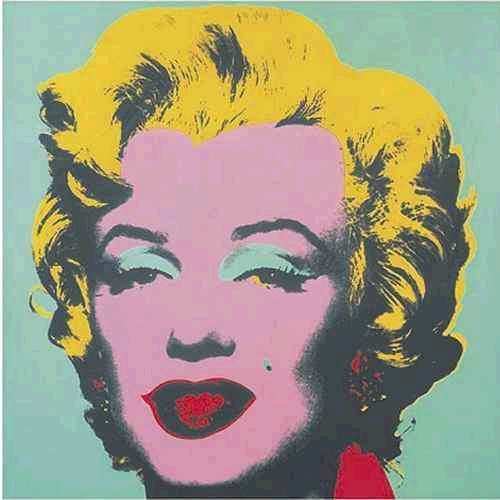
So, items such as reality TV and social networking, where the media and our lives become closer and closer, could be seen as an evolution from a movement started by Warhol (obviously huge amounts of other influences exist too). So do I think art and pop culture will keep going on this track of merging media and our real lives? With the popularity of Facebook and the continuing endurance of reality TV, yes I do; but an important question remains on the intent of reality programming: does it seek to represent how our lives are or how our lives should be?
Final Blog: Facebook, Privacy and the Future of Society Pt. 2
And we are more connected than ever.
In 1929 a Hungarian author put forth his idea of the ‘six degrees of separation,’ a concept whereby all humans are connected through a web of six acquaintances. With Facebook, the degrees of separation are shrinking. Now, I can type the name of virtually anyone around the globe, and with a click of a button see their information and leave them a message. There is a sacrifice of privacy, but it is a joint sacrifice. For most of modern western history, people have focused on their family and their privacy. But now is a time to branch out and be connected with the entire world. I might have my picture available to anyone on the web, but so do half a billion other people around the world on Facebook’s network.

I am not concerned about merging the separated parts of my life. The world is becoming more open, why not embrace it? If my teachers can see my video blogs on Youtube in which I’m talking about my life at home, so be it. Maybe they will get to know me better as a person. Now, one does have to be careful in this new age of openness. Ranting over one’s boss on Twitter on the work computer is obviously a bad idea. And then there is the whole issue of anonymity.
Perhaps this is the central issue of the 21st century Wild Wild West, the issue of anonymity. What happens on forums or Youtube videos or Chatroulette where everyone is anonymous and no one must take responsibility for their words or actions? The response is mixed, it turns out anonymity can both be very good and very bad. On the bad side, anonymity gives people cover to be as hateful as they want. When a black friend of mine put a video on Youtube in late 2008 criticizing John Mccain’s presidential campaign, she was slammed, and targeted with appalling racial slurs and other offensive language. In real life, people who said what was said to my friend would be in jail with hate crime charges, but this is a common occurrence on Youtube video comments and other online forums. On Chatrulette, it is not uncommon to see nudity, gross-out pictures and other lewd things, and on formspring.me a student committed suicide after a barrage of anonymous online bullying attacks. On the other hand, anonymity can be a powerful tool for positive social change. In Iran, people could speak out against the government on Twitter without fear of retribution due to its relative anonymity. Now, people can easily leak political scandals and misdeeds onto the web, and videos documenting police brutality are endless on Youtube. The ease in which people can pull out their phone and put a video on Youtube changes the entire culture. It changes the very way we deal with our privacy. But I would argue that it’s changing in a rapidly positive way, maybe four steps forward for every one step back.
The web is changing rapidly, and with that, the world. Caught up in this rapidly moving culture I find myself both cautious and excited. In terms of the way technology is bringing people together, this is a golden age to grow up in. Facebook is the perfect social tool for teenagers and college students. Sure, privacy is being lost, and perhaps the line between private and public is being blurred, but that’s a sacrifice I’m willing to make. If giving up some privacy means I can keep in touch with my friend in Columbia, or see pictures of my cousin’s new dog in Atlanta, or keep up with what’s going on on the ground in Haiti through Twitter, or stalk my new roommate’s facebook then so be it. It’s worth it. Privacy is important, but the world is moving towards becoming more connected, smaller and more intimate where everyone is a friend of a friend. I think I like this new world. For now, I’m going to give it a try.
In 1929 a Hungarian author put forth his idea of the ‘six degrees of separation,’ a concept whereby all humans are connected through a web of six acquaintances. With Facebook, the degrees of separation are shrinking. Now, I can type the name of virtually anyone around the globe, and with a click of a button see their information and leave them a message. There is a sacrifice of privacy, but it is a joint sacrifice. For most of modern western history, people have focused on their family and their privacy. But now is a time to branch out and be connected with the entire world. I might have my picture available to anyone on the web, but so do half a billion other people around the world on Facebook’s network.

I am not concerned about merging the separated parts of my life. The world is becoming more open, why not embrace it? If my teachers can see my video blogs on Youtube in which I’m talking about my life at home, so be it. Maybe they will get to know me better as a person. Now, one does have to be careful in this new age of openness. Ranting over one’s boss on Twitter on the work computer is obviously a bad idea. And then there is the whole issue of anonymity.
Perhaps this is the central issue of the 21st century Wild Wild West, the issue of anonymity. What happens on forums or Youtube videos or Chatroulette where everyone is anonymous and no one must take responsibility for their words or actions? The response is mixed, it turns out anonymity can both be very good and very bad. On the bad side, anonymity gives people cover to be as hateful as they want. When a black friend of mine put a video on Youtube in late 2008 criticizing John Mccain’s presidential campaign, she was slammed, and targeted with appalling racial slurs and other offensive language. In real life, people who said what was said to my friend would be in jail with hate crime charges, but this is a common occurrence on Youtube video comments and other online forums. On Chatrulette, it is not uncommon to see nudity, gross-out pictures and other lewd things, and on formspring.me a student committed suicide after a barrage of anonymous online bullying attacks. On the other hand, anonymity can be a powerful tool for positive social change. In Iran, people could speak out against the government on Twitter without fear of retribution due to its relative anonymity. Now, people can easily leak political scandals and misdeeds onto the web, and videos documenting police brutality are endless on Youtube. The ease in which people can pull out their phone and put a video on Youtube changes the entire culture. It changes the very way we deal with our privacy. But I would argue that it’s changing in a rapidly positive way, maybe four steps forward for every one step back.
The web is changing rapidly, and with that, the world. Caught up in this rapidly moving culture I find myself both cautious and excited. In terms of the way technology is bringing people together, this is a golden age to grow up in. Facebook is the perfect social tool for teenagers and college students. Sure, privacy is being lost, and perhaps the line between private and public is being blurred, but that’s a sacrifice I’m willing to make. If giving up some privacy means I can keep in touch with my friend in Columbia, or see pictures of my cousin’s new dog in Atlanta, or keep up with what’s going on on the ground in Haiti through Twitter, or stalk my new roommate’s facebook then so be it. It’s worth it. Privacy is important, but the world is moving towards becoming more connected, smaller and more intimate where everyone is a friend of a friend. I think I like this new world. For now, I’m going to give it a try.
Final Blog: Facebook, Privacy and the Future of Society Pt. 1
Are social media and web 2.0 destroying society as we know it? Are they tearing apart the fabric of civilization? Are they creating a ‘big brother’ 1984 like society that eliminates human privacy and autonomy? Many seem to think so. Where do these myths come from anyway? Why does the media continue to attack facebook and youtube and twitter?
In the 1950s in America, America had just returned from years of war in Europe and across the pacific. Many reveled in their lives of clean normalcy and white picket fence conformity. Calm was appreciated after the war. When these folks had children however, the youth who resulted from the ‘baby boom’ became restless in their ‘Leave it to Beaver’ society. They rebelled, and created the counter-culture of the 1960s. Change was inevitable, and yet there was massive backlash to the new counter-culture. The ‘silent majority’ thought these young social revolutionaries were either crazy or communists (or both). They looked at change as dangerous, and often went to extreme measures to keep things the same. However few seem to realize that American history was founded on change. A new nation springing from Europe’s ‘New World,’ America came into being through a bloody revolution. The status quo was what the founders tried to get AWAY from. So why have Americans throughout our history continued to reject and be afraid of change?
I see social media as a high change for good. And the youth of America agree. We elected Barack Obama on the notion he would bring hope and change to a country in crisis, and it is hard to not notice that 99% of media criticisms towards new social media is written by adults, not the youth using it. Now, there is no doubt that every change has its consequences, but there are massive benefits to reap from the age of web 2.0. And Facebook goes beyond telling the world what you had for breakfast (a toasted bagel with cream cheese) and Youtube goes beyond funny videos of cats playing piano. These user-generated-content tools give people inordinate amounts of power and access. When before could a disabled boy, unable to speak, send a message to hundreds of people? When before could a young business entrepreneur struggling, with little money, watch a video of a lecture at Harvard’s Business school for free? Now, in 2010, the people rule the world.

In the 1950s in America, America had just returned from years of war in Europe and across the pacific. Many reveled in their lives of clean normalcy and white picket fence conformity. Calm was appreciated after the war. When these folks had children however, the youth who resulted from the ‘baby boom’ became restless in their ‘Leave it to Beaver’ society. They rebelled, and created the counter-culture of the 1960s. Change was inevitable, and yet there was massive backlash to the new counter-culture. The ‘silent majority’ thought these young social revolutionaries were either crazy or communists (or both). They looked at change as dangerous, and often went to extreme measures to keep things the same. However few seem to realize that American history was founded on change. A new nation springing from Europe’s ‘New World,’ America came into being through a bloody revolution. The status quo was what the founders tried to get AWAY from. So why have Americans throughout our history continued to reject and be afraid of change?
I see social media as a high change for good. And the youth of America agree. We elected Barack Obama on the notion he would bring hope and change to a country in crisis, and it is hard to not notice that 99% of media criticisms towards new social media is written by adults, not the youth using it. Now, there is no doubt that every change has its consequences, but there are massive benefits to reap from the age of web 2.0. And Facebook goes beyond telling the world what you had for breakfast (a toasted bagel with cream cheese) and Youtube goes beyond funny videos of cats playing piano. These user-generated-content tools give people inordinate amounts of power and access. When before could a disabled boy, unable to speak, send a message to hundreds of people? When before could a young business entrepreneur struggling, with little money, watch a video of a lecture at Harvard’s Business school for free? Now, in 2010, the people rule the world.

Tuesday, May 25, 2010
Blog Post #2: Reflection on the Project and my Work
Throughout this entire project, I took on a diversity of roles. For my more minor roles, I assisted the creation of the poster by offering help to those who were not well versed in Photoshop. In this case, my experience from Explorations in art had helped me. Additionally, I was a key piece of one of the two posters promoting “Days of David.” In the poster of the night club, I dressed as the stereotypical young Italian American with my flashy and overstated dress shirt, jewelry on my neck, and oversized sun glasses. This plays to the idea of overdoing everything, something that the characters of Jersey Shore are known to do (eg tanning and working out).
My other primary role was playing David’s best friend in “Days of David.” While I was not the central character in the full movie (that was reserved strictly for David, hence the title “Days of David”), I still added to the message about reality television. Before this, I embodied the satire of the reality television character but with this video I embodied it. Whether it is my unbridled love for the Jagrbomb alcoholic beverage or my “Broski” attitude, I had brought that character on the poster to life on the screen. In addition, I contributed to the setting of the filming by portraying myself as a nonchalant student in the classroom, which shows that the video is clearly satirizing the life of a high school student. All in all, my role mainly contributed to the quality of the film and poster production by setting the stage for “Days of David.”
My other primary role was playing David’s best friend in “Days of David.” While I was not the central character in the full movie (that was reserved strictly for David, hence the title “Days of David”), I still added to the message about reality television. Before this, I embodied the satire of the reality television character but with this video I embodied it. Whether it is my unbridled love for the Jagrbomb alcoholic beverage or my “Broski” attitude, I had brought that character on the poster to life on the screen. In addition, I contributed to the setting of the filming by portraying myself as a nonchalant student in the classroom, which shows that the video is clearly satirizing the life of a high school student. All in all, my role mainly contributed to the quality of the film and poster production by setting the stage for “Days of David.”
Blog Post #1: The Blurred Line between Reality and Reality Shows
When looking at the state of contemporary media and its outlets, it is apparent that it has a say in affecting the lives of everyone in this country, for better or for worse. When I am referring to outlets, I mean virtually all forms of media that Americans can receive, including television and streamed media through the World Wide Web. As more and more households implement internet services that have a higher bandwidth (maximum streaming capacity), they are able to watch television with regularity in a convenient setting through various services like Hulu and Netflix. Due to this mass propagation of media with previously exclusive channels such as MTV, the primary emanating source of reality television shows, the vast majority of Americans have access to this particular form of media. We are now at the point where there is no such thing as exclusive television or media, nearly everything can be accessed through pirating programs like Pirates Bay or Limewire. What does this mean? All Americans can now access the primary television networks that are dominated by reality television programming. Essentially, America has cut out the middle man for their access to this new social craze.
Before assessing the effect of these reality shows, a look at what these shows constitute is necessary. Essentially, the television network is documenting the daily lives of certain individuals including their struggles and the intimate details of their personal lives. One common form that this program takes is the gathering of various individuals into a single home and documenting their relationships and tensions. For the sake of entertaining the American palette, this group of individuals often participates in acts of infidelity and aggression towards their housemates. At its very core, it is the display of the drama in the lives of these individuals. The primary example of this type of reality television is MTV’s “The Real World,” which takes all sorts of individuals and puts them in a picturesque vacation home in a location like San Diego or a classy high rise apartment in New York City. In addition to filming the cast in the home, they are followed to locations such as night clubs or anywhere else conducive to high drama. This formulaic approach has creeped its way into a significant amount of network television, even in shows that have another focus such as American Idol or Last Comic Standing. In addition, this sort of programming has blurred the lines between real life behavior and staged actions. In MTV’s “My Sweet Sixteen,” a show documenting the planning process of a teenager’s birthday and the party itself, the stage crew often makes the birthday boy’s/girl’s love interest dance around with other peers to draw feelings of jealousy. With this program, MTV is emphasizing the stereotype that teenagers live drama riddled lives. While this is clearly not the kind of behavior that the guest of honor’s interest would participate in, MTV does this to draw more interest its viewers by bending this reality.
Given that this kind of television has a pervasive presence within American networks, the influence on human behavior is significant. First, MTV sets the bar for fashion through dressing up their reality television actors in trendy apparel. During my time in the Middle School, fitted baseball caps and baggy jeans were the norm for the boys and the girls used gratuitous amounts of eyeliner. Not coincidentally, this was the attire for the cast of “The Real World: Cancun.” For something that is accepted as the norm in terms of clothing, this show and others of the like have an unprecedented affect in changing the way people dress. This is certainly more powerful than overt advertising prevalent in network television, which the people say they are wise to the advertising tactics. Because the viewer is drawn into the lives of these characters in the program, they subconsciously pick up on the trendy fashion shown before them. So in essence, this false reality created in the reality show is affecting the behavior and lives of its viewers. MTV should be aware that it holds a great power in that they can affect the behavior of its viewers. If they do not use this power responsibly, then there is the risk that they can negatively affect the self confidence and emotional well being of the youth in America.
Before assessing the effect of these reality shows, a look at what these shows constitute is necessary. Essentially, the television network is documenting the daily lives of certain individuals including their struggles and the intimate details of their personal lives. One common form that this program takes is the gathering of various individuals into a single home and documenting their relationships and tensions. For the sake of entertaining the American palette, this group of individuals often participates in acts of infidelity and aggression towards their housemates. At its very core, it is the display of the drama in the lives of these individuals. The primary example of this type of reality television is MTV’s “The Real World,” which takes all sorts of individuals and puts them in a picturesque vacation home in a location like San Diego or a classy high rise apartment in New York City. In addition to filming the cast in the home, they are followed to locations such as night clubs or anywhere else conducive to high drama. This formulaic approach has creeped its way into a significant amount of network television, even in shows that have another focus such as American Idol or Last Comic Standing. In addition, this sort of programming has blurred the lines between real life behavior and staged actions. In MTV’s “My Sweet Sixteen,” a show documenting the planning process of a teenager’s birthday and the party itself, the stage crew often makes the birthday boy’s/girl’s love interest dance around with other peers to draw feelings of jealousy. With this program, MTV is emphasizing the stereotype that teenagers live drama riddled lives. While this is clearly not the kind of behavior that the guest of honor’s interest would participate in, MTV does this to draw more interest its viewers by bending this reality.
Given that this kind of television has a pervasive presence within American networks, the influence on human behavior is significant. First, MTV sets the bar for fashion through dressing up their reality television actors in trendy apparel. During my time in the Middle School, fitted baseball caps and baggy jeans were the norm for the boys and the girls used gratuitous amounts of eyeliner. Not coincidentally, this was the attire for the cast of “The Real World: Cancun.” For something that is accepted as the norm in terms of clothing, this show and others of the like have an unprecedented affect in changing the way people dress. This is certainly more powerful than overt advertising prevalent in network television, which the people say they are wise to the advertising tactics. Because the viewer is drawn into the lives of these characters in the program, they subconsciously pick up on the trendy fashion shown before them. So in essence, this false reality created in the reality show is affecting the behavior and lives of its viewers. MTV should be aware that it holds a great power in that they can affect the behavior of its viewers. If they do not use this power responsibly, then there is the risk that they can negatively affect the self confidence and emotional well being of the youth in America.
Thursday, May 20, 2010
final blog 3/3

As individuals rely less on familial connections and success is measured simply in terms of status in both education and occupation, a natural rift occurs between the work and family facets of one’s life. Personally, I have found that as I progress in my educational career the more difficult it has become to manage my now separate lives at Athenian and my house. At times, it even feels like the pressure from both my parents and peers coerces me into a position where I must pit the feelings of my family against that of my friends. Unfortunately, whether I am at home or school I feel that I have to act or behave differently simply to fit into the depiction that they have created of me. Recently, as my life is further connected to my friends through social networking sites such as Facebook, I must further evaluate and dissect my relationship with my family and my right to hide certain information from both. While I “friend” people I barely know and continue to avoid any virtual contact with my family online, I wonder who is more important to me. Is it right for teenagers to have a place (in this case Facebook) where they have the false sense of security to be able to post any feelings, true or false, under the veil of anonymity? Should the minor be allowed a place where he or she can share emotions with peers without fear of consequences? Personally I believe that any feeling worth sharing with a friend is worth sharing with other friends and even family. The danger of a place like Facebook or even conversations through text messaging is that it offers an individual a place where they can vent negative emotions without the awkwardness of face-to-face conversation. The social life of humans and particularly students would be greatly improved if such means of communicating were removed and the social gap between school and home were bridged and unified.
final blog part 2

I definitely do not think that the new trend in social media will be towards a wikitopia or even web-topia, at least not any more than it already is. In today’s media-enhanced world I feel that it keeps evolving and new technology and sites keep coming out fast enough that no one individual (corporation) is popular long enough to become so powerful. Myspace was the new everything in terms of social networking only about 5 years ago, and now Facebook has surpassed every aspect of it. I do believe that it is possible for corporations to capitalize on the teen and young adult market with their seemingly unending stream of cash by monopolizing everything we see on the internet, television, magazines, anything, so that it can be traced back to one source. This would be the next step that TV networks like MTV were doing in the 90s. Their parent company would dictate exactly what was seen on the show in order to please their clients, i.e. ads for Sprite and Virgin Records, because it was all about the revenue. In this way they produce the most money until teens realize they are being manipulated and then they move on unless marketing has anticipated this, which they normally do, and have already begun the next string of consumerism. In a way, social media is evolving at an extremely rapid rate, but since companies cannot always account for where teens will go next, we are inherently unpredictable, some companies get left behind unless they are willing to go to similar extremes as the consumers are. Today, Facebook is where MTV probably was over a decade ago in terms of reaching out to as many people as possible and changing the way they receive and send news. Much like AOL’s instant messenger, which Facebook has only ‘recently’ brought back, today’s youth is communicating more and more with their peers and whoever is willing to converse with them in similar mediums. Even to a high schooler, the idea of using Twitter is met with a response akin to “that’s for old people (re: over 25) and Lindsay Lohan. I definitely do not think that social media will end up as some sort of one-minded, evil dominated empire anymore than it already is. Although with the way technology is heading and where the world already is, it is impossible to say what abilities we will have eventually and how we and those in ‘power’ (re: mega-corporations or the consumer? The mook or Viacom?) use that capacity.
Wednesday, May 19, 2010
final blog part 1

a. For our class’ final video project we have been using some e-mails back and forth, but more recently we have created an extensive Facebook group that documents the activities we will be doing for that day and what we have already done. We also used search engines on the internet to do lots of research for our project; we wanted to see how the various stars of reality shows dressed and to see clips of the shows. For the posters that were put up, the more technologically saavy of us used Photoshop to fix up the images where we superimposed images of students on ‘reality show’ set backgrounds. For the video clips we took inspiration from most every show on TV, from the confessionals on America’s Next Top Model and even all the kitchen shows, to the lead-ins that are seen on the best soap operas and teaser clips of forthcoming episodes to create more drama and suspense. I think we had some trouble finding our main goal for the project, but now that we have created a theme that goes along with the video and our desire to demonstrate a commentary on the affects of reality TV shows and how prevalent they are in the media today, I think we have really found a good path to be working on. Although I have really liked and enjoyed working on this project and I do think it’s really fun to dress up, I think a lot of the costumes were only worn by a few members of the class, mostly the guy actors and a few girls. Sometimes it is hard to tell whether the whole class is working and I hope all of our projects are able to come together in the end to present how well we understood our theme.
Monday, May 17, 2010

I definitely see product placement everywhere, in the shows I watch, movies even books I read in middle school like The Clique, The A-List, and the Gossip Girl series’, so much to the point where I’ve started looking for it. In Friends, there was an episode where Chandler has a Yoohoo and after that episode I went out and bought my first chocolate drink (it’s mostly made of water) and nearly all the kinds of shows I watch have some sort of Burberry or Lacoste promotion. More recently cars have been highly advertised, from Gaby’s Maserati on Desperate Housewives to Audi’s continuous stream of Transporter films to their more obvious placement in The Joneses. The Joneses is a dark film that plays up product placement, it’s four people’s jobs to pretend to be a family and get their new friends to want and buy everything they have, from food to hair products, clothes, jewelry, and cars (specifically Audis). Even in music videos there is plenty of product placement. In the new version of Toxic Britney rides on the back of a Ducati sport bike. In Britney Spears’ video for Piece of Me there were a fleet of Mercedes G-series (they look like a boxy Jeep), and Womanizer uses a Mercedes sedan. Also in Womanizer is a Nokia phone, and the screen freezes momentarily on a calendar meeting titled “Product Placement”. In Cobra Starships Good Girls Go Bad Leighton Meester repeatedly texts on a Nokia Xpress Music phone. I know that much about it because it shows that much of the phone. Product placement is an excellent way for companies to make more money and to encourage the consumers to continue consuming and being shallow. I do think it’s pretty funny when fake companies are used to mock real corporations, like in Wall-E, although the BuynLarge is kind of haunting because it seems like a plausible future.
Thursday, May 13, 2010
my crazy side project
So I've gone off on a little bit of a tangent with our project and am blogging about a experiment I'm trying on facebook this week. Here's the link to my blog-- I'll update with more news of the project as it progresses.
http://makepeacerantings.blogspot.com/
Tell me what you think!
Because of the nature of this project I'm having some problems making my way through facebook for a while, so might not be able to write on the group wall for a few days, so I'll try to update here or on my blog.
http://makepeacerantings.blogspot.com/
Tell me what you think!
Because of the nature of this project I'm having some problems making my way through facebook for a while, so might not be able to write on the group wall for a few days, so I'll try to update here or on my blog.
Monday, April 12, 2010
Nickelodeon Marketing

While I was eating dinner yesterday, I flipped through the television channels and stopped at a show on Nickelodeon. Although I grew up watching the Nickelodeon network, and think I realized, to some extent, the messages and advertising on some of these shows (for example, after Keenan & Kel, I loved orange soda partially because it was highly advertised on the show), I was surprised to see some of the more blatant advertising that many of the shows are currently exploiting. For example, one television show that is primarily based on a web show displays a mock Apple computer icon (in the shape of a pear) numerous times on every episode I've seen in the series. The symbol is on all of the computers and phones shown during the show, and are obviously directly marketing the Apple brand without making the support too blatant. Many of the shows also have drinks and food that could be directly associated with drinks and food that are found in everyday life. Another show uses a similar tactic of changing the name of the show props to make them seem more accessible to audiences that have some economic power (in this case, children have some power over their parents).
All of these examples made me think about the product the shows were promoting, and therefore, in essence, did their job. However, I feel that it's somewhat underhanded to feed kids these messages without being entirely explicit. As teenagers, most people have the knowledge to separate what one needs from what one is being told they need; however, I feel that children are more gullible to the messages that the media is sending. The "explicit" advertising is influencing their behavior.
All of these examples made me think about the product the shows were promoting, and therefore, in essence, did their job. However, I feel that it's somewhat underhanded to feed kids these messages without being entirely explicit. As teenagers, most people have the knowledge to separate what one needs from what one is being told they need; however, I feel that children are more gullible to the messages that the media is sending. The "explicit" advertising is influencing their behavior.
Monday, April 5, 2010
Dream & Symbolism
Please blog about one of the following:
Have you ever had a dream featuring a character, actor, personlity or plotline that is from the media? Did the presence of the media element change or alter how you experienced the dream?
Can you identify instances in the media in which symbolic or dreamlike imagery is used to enhance the story? How did this imagery move the story forward?
Can you identify an instance in which well-placed logos, symbolism or subliminal imagery in the media is meant to influence your behavior? How did it make you feel about the media you were watching?
Have you ever had a dream featuring a character, actor, personlity or plotline that is from the media? Did the presence of the media element change or alter how you experienced the dream?
Can you identify instances in the media in which symbolic or dreamlike imagery is used to enhance the story? How did this imagery move the story forward?
Can you identify an instance in which well-placed logos, symbolism or subliminal imagery in the media is meant to influence your behavior? How did it make you feel about the media you were watching?
Wednesday, March 31, 2010
Art & Propganda

An interesting article by Milton Glaser, the most influential American graphic designer, on art and propganda
http://www.thenation.com/doc/20080310/glaser
Tuesday, March 30, 2010
Propaganda or Not?
Do we sometimes go far in labeling films as propaganda? Read the following articles about the films 300 and
Blackhawk Down
300
http://artthreat.net/2007/10/300-racist-war-propaganda/
from the left-leaning, but highly edited/fact-checked blog the Daily Kos
http://www.dailykos.com/story/2007/3/13/11613/1811
Nytimes review of Blackhawk Down
http://movies.nytimes.com/movie/review?res=9903E3D61031F93BA15751C1A9679C8B63
Blackhawk Down
300
http://artthreat.net/2007/10/300-racist-war-propaganda/
from the left-leaning, but highly edited/fact-checked blog the Daily Kos
http://www.dailykos.com/story/2007/3/13/11613/1811
Nytimes review of Blackhawk Down
http://movies.nytimes.com/movie/review?res=9903E3D61031F93BA15751C1A9679C8B63
Tuesday, March 2, 2010
The Implications of the "Axe Effect"

Looking at this advertisement, I think the message and the target demographic is clear. I do not feel the need to explain the pencil and sharpener metaphor, as this class is perceptive enough to figure that out. Unilever is making an attempt to win over the many adolescents who seek to have better luck in their pursuit of action. At this stage of growing up teenage boys are led to believe that one's self worth is based on having multiple sexual experiences. This plays to their insecurity around girls by giving them the impression that AXE is all they need to win them over. Besides targeting this demographic, Unilever is giving them new impressions of women. Through these advertisements, women are portrayed as suddenly becoming hypersexualized right when they smell cheap scents in the vicinity. So with the AXE effect there is a double edged effect: girls are portrayed as easy and boys are led to believe that sexual relations are based on superficial things.
Monday, March 1, 2010
Blog for Monday 3.1.10
What examples do you see in the media of women being used as sexual objects in the media?
So when I read this question, the first thing that popped in my head was PORN! I mean come on it can't get worse than that. Women are being used by men in the media via porn for money. Sure porn is "entertainment," but really? Women are being used as sexual objects--literary. Porn isn't the one only thing. There is also video games. As we the movie pointed out, Grand Theft Auto: San Andreas is a perfect example of this. Having played this game numerous times, I know first hand how women are treated in the game. It may only be a video game but there are kids out there who are ignorant and playing this game and it is sending them the wrong message. In the video game you can go pick up a women off the street, have sex with them in you car and than beat them to death and take their money. What would a 13 year old think when he is playing this game?
p.s. Stacey--Can I use this as my topic for my essay? I'm really interested in this one.
So when I read this question, the first thing that popped in my head was PORN! I mean come on it can't get worse than that. Women are being used by men in the media via porn for money. Sure porn is "entertainment," but really? Women are being used as sexual objects--literary. Porn isn't the one only thing. There is also video games. As we the movie pointed out, Grand Theft Auto: San Andreas is a perfect example of this. Having played this game numerous times, I know first hand how women are treated in the game. It may only be a video game but there are kids out there who are ignorant and playing this game and it is sending them the wrong message. In the video game you can go pick up a women off the street, have sex with them in you car and than beat them to death and take their money. What would a 13 year old think when he is playing this game?
p.s. Stacey--Can I use this as my topic for my essay? I'm really interested in this one.
Too much flavor?
 The show, "Flavor of Love", was created so Flavor Flav could find his true love. He invites 20 women into his mansion so they can compete against each other for his love. Throughout most of the episodes, the women are scantily clad. Oh, and do not forget the nicknames. "Buckwild", "Hottie", "Deelishis", "Like Dat", "Nibblz" and so on...Now, onto a summary of one of the episodes: "Flavor Flav challenges his remaining fifteen Flavorettes to a never before attempted hot tub speed dating competition. That's right, fifteen hot tubs, fifteen half naked girls, and one bathrobe clad rap star. The girls are given ten minutes each to leave a lasting impression on Flav as he scuttles wet and shivering from tub to tub in his fuzzy leopard print slippers. In the end, three girls are chosen because Flav "was feelin'" (it's a metaphor) them the most."
 Who, watching this show, actually cares about Flavor Flav's true love? Who is watching it for the sexy women rarely fully clothed? And who is watching it to waste their time? This is not even the only one of these shows, there was, "A Shot at Love with Tila Tequila", "For the Love of Ray J", "Real Chance of Love", and "Rock of Love". All of these shows include consistently half naked women doing something 'sexy' to impress some famous person. These women just want their fifteen minutes and apparently to get it, they have to go naked.
The Ugly Truth
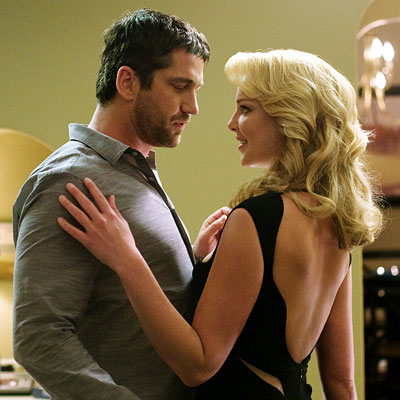
In today’s media I often see all of these things being portrayed. Women cannot be successful without being sexy- overtly feminine- or masculine- toning down their woman-ness. One example of this is in The Ugly Truth, starring Katherine Heigl and Gerard Butler. Heigl undergoes the transformation from successful yet boring, not sexy, and un-dateable to a flirty hybrid stripper/librarian in order to get the guy. In order to do this Heigl gets help from manly man Butler who instructs her on how to correctly be a dim-witted bimbo that cannot even show how smart she is because that is not what will attract a man to her. Throughout the somewhat predictable movie Heigl follows a standard process of emerging from her chrysalis into a sex object. This doesn’t last long, as Heigl eventually comes clean, which means she doesn’t get the sexy doctor, but instead gets Butler. The movie is able to both perpetuate all stereotypes of the sexy or successful career woman and reassure the viewer that men want both substance and looks. In the end we are supposed to have learned that outward beauty isn’t everything and being true to yourself is more important, but really the movie only proved how superficial and shallow people are because despite its attempts to shun perfection, the happy-ending is only after Heigl has found a balance between herself and her prettier, sexy self. In addition, Butler's character is a typical macho man that doesn't believe in love, but it's not even ironic that he falls in love with Heigl's character and proceeds to change her into his dream woman before finally getting her in the end.
silence+body=woman
Even today, the rule which a woman plays in the movie is a housewife, someone who needs a man to rely on, or someone doesn’t have the power. They use their body to pay back their husband to make their husband happy and contented on the bed; they use their body to talk. Most of the movie is telling the audience that a woman with knowledge doesn’t mean success but woman with a talkative body is the winner. Even though there are some movies show some brilliant woman, who can take control over man, however, at the end the man is always the winner. So from most of the media what I see is that woman can only be the supporter; who support their man by their body. For some audience they might find it normal; and don’t think is a bad thing that woman in the movie are in this kind of role. However, for some audience they might think woman is useless or an object. Moreover, it could easily lead to some domestic violence since woman has not right to talk with their mouth.
We Can Do It!

Serena Williams and her sister Venus are two influential women in society. They’re professional tennis players and were both ranked high up in the league. Serena has won the most grand slams as any other professional woman tennis player. She has both physical and mental masculine traits, such as her buff body and ripped arms. She is definitely a threat to a lot of men tennis players and she has ability to be just as good, if not better than a lot of other men tennis players. She gets what she wants by putting In hard work and sweat in order to be the best of the best. Being a woman, I feel that she has to try even harder to make a good enough impression when compared to other men. She had to work harder to get to the top because of her gender, I’m guessing. In the end, she achieves what she works so hard to get because even though she’s a woman she can still be buff and strong like any other man. She’s a living role model to a lot of the women athletes because if Serena can do it, we all can!
Socially acceptable, but sexually distorting


I do warn you, this video does have some disturbing images, but I'm going to safely assume this class is mature enough to handle it without making a big deal about it and overlook the message that this video has to offer.
After watching a documentary on the hypersexualization of children, especially young girls and "tweens," by images from the media and advertisements from companies, it's become increasingly difficult to delineate what one can call sexy, slutty, and just plain pornographic. I'm not gonna lie, but everywhere I go, any magazine I pick up, every show I come across has the same theme over and over again: women have to portray themselves as hot, exuding sex appeal in every frame or snapshot in order to get attention from viewers.
In my opinion, the audience being manipulated by these images and shows with women portrayed as hypersexual is definitely children, especially girls. I know it must be frustrating to constantly hear that girls and women are the perpetual target of the media, but there is a definite connection between the media and its creation of this standard that it expects or almost forces girls to follow. It's a feedback loop that I feel is created when the media creates the idea that men enjoy these images, and that girls cannot be accepted or loved by men if they do not follow that standard. Straying away from the norm that is girls must be concerned solely with their image, that their intelligence does not matter, and that sexy is the only attitude to embrace makes a girl "ugly," "unattractive," and "unpopular."
There's no doubt that sexual images that are borderline pornographic have permeated society to the point where everyone is exposed to them but is almost ok with them. We are subjecting ourselves to a hegemony of where it's ok for women and girls to be sexualized because if they don't follow that standard, there cannot be any possibility of ever being considered attractive. There is definitely evidence that the insecurity of not being accepted by social standards has been exploited by the marketers and media, but if we keep buying into that idea, I don't think we'll be able to break free from it any time soon.
Subscribe to:
Posts (Atom)